Insects are good for your health!
Humans have been eating insects for thousands of years! It’s a phenomenon called “entomophagy.” Well, believe it or not, entomophagy is an increasingly popular trend in the West, especially… in Quebec!
Much like fruits and vegetables, insects are full of good things for your health, like vitamins and minerals. They are also rich in proteins that help us grow and stay fit! Insects are good for your health, but that doesn’t mean you can eat the ones you find in the garden! You have to know them very well to be able to identify which ones you can eat. Then, you have to cook them, like many foods we eat! It’s only when they are well prepared that they are a real treat!
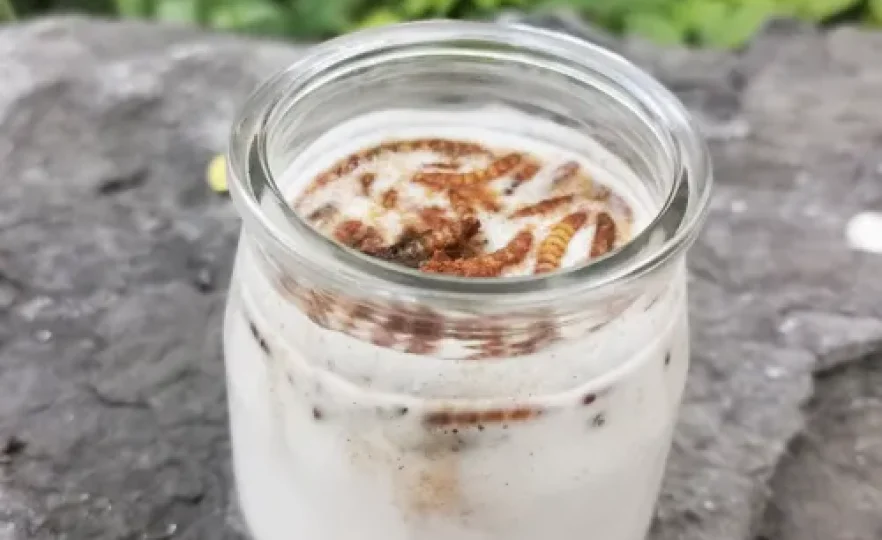
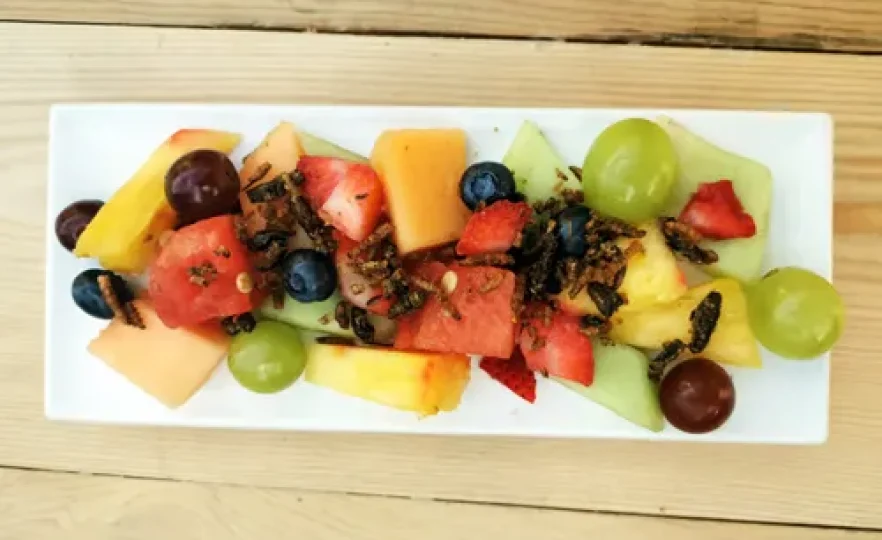
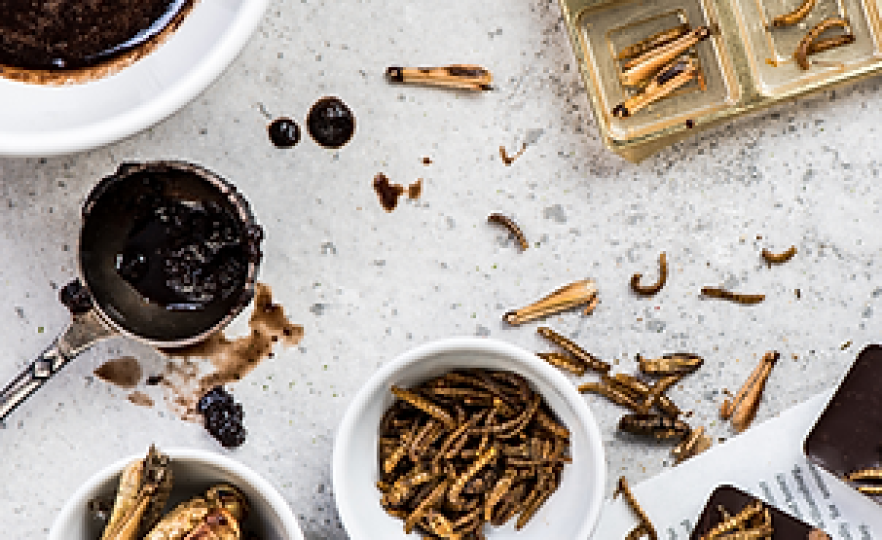
You can even add insects to your usual diet! For example, they can be a great addition to smoothies, juices, and yogurt. You can even add them in powder form. This will make your snack more balanced and keep you fuller for longer.
Insects contain a lot of protein
Proteins are large molecules found in the bodies of all living things. Eating protein helps us grow and be healthy. Have you ever heard that insects are rich in protein? It’s true, they contain a lot! That said, their protein content varies greatly! Depending on the different species, the protein percentage can change. For example, in insects like crickets and grasshoppers, most species contain between 25% protein—about the same proportion as a steak—and 65% protein, which is much more than most foods!
But even within the same species, protein content varies…
- depending on what the insect has eaten during its life;
- the stage of its life cycle where it is (for example, whether it is a larva or an adult);
- the way he was raised;
- how to prepare it!
In any case, insects are generally very rich in protein! What’s more, these proteins are of excellent quality because they contain all the amino acids essential to our health!
Just for survival? – FALSE!
Humans eat insects only in survival situations. Is this true? It’s false! There are many reasons why humans eat insects. To discover one of them, just go to southern Africa, more precisely to Namibia. The tree below is called a mopane. And in these trees, we find caterpillars called mopane caterpillars.
This is the most harvested caterpillar species in the world! Every year, 9.5 billion are collected! That’s a lot of caterpillars! Usually, the harvested caterpillars are dried. This way, they keep for a very long time!
Livestock farming in Quebec
The world’s population is expected to reach 9 billion by 2050. According to the Food and Agriculture Organization of the United Nations (FAO), to feed all these people, we will need to double the volume of our global food production by then. This represents a huge challenge, especially when it comes to providing sufficient protein for everyone. Although no permit is required for insect production—according to the Ministry of Agriculture, Fisheries and Food (MAPAQ)—it remains the responsibility of each producer to ensure the safety of the products offered to consumers. However, food hygiene and safety regulations apply to the processing and preparation of insects for human consumption. This is why it is important to ensure that the insects offered are suitable for human consumption.
You can find the different producers and processors through their association: Association of Insect Breeders and Processors of Quebec (AÉTIQ)
Insect Fact Sheets:
The two most common species in Quebec are the cricket and the mealworm.
House cricket
Acheta domesticus
Order: Orthoptera
Distribution :
Native to Europe
Now cosmopolitan
Consumed:
Distribution:
Native to Europe
Now cosmopolitan
Consumed:
Mainly in Asia, but gaining popularity elsewhere in the world.
The house cricket belongs to the Gryllidae family. Omnivorous, the cricket feeds on leaves, seeds, fruit, other dead or living insects, food scraps, etc., among other things. Nearly 5,000 species of crickets are known worldwide, but not all are consumed by humans.
Consumption:
Crickets are increasingly consumed in many regions of the world, particularly in Quebec, because they are particularly easy to raise. They can be eaten whole or ground into powder and added to many recipes (cakes, pasta, meatballs, etc.).
Mealworm
Tenebrio molitor
Order: Coleoptera
Distribution :
Native to Europe
Now cosmopolitan
Consumed:
Europe, North America, and probably elsewhere
The mealworm belongs to the Tenebrionidae family. Also called “mealworm,” the mealworm feeds primarily on cereals, fruits, or meat. Nearly
20,000 species of mealworm are known worldwide, but not all are consumed by humans.
Consumption:
Consumed in its larval stage, the mealworm is one of the most widely eaten insects in North America (for example, in the form of derived products). It is particularly rich in vitamin B12, Omega-6, 7, and 9, in addition to being an excellent source of protein. Since it is easy to raise, it could be used in space as a source of protein by astronauts!
Why choose the mealworm?
Mealworm larvae are of great interest in livestock farming because they can be fed food waste (but kept under hygienic conditions). These larvae are so efficient at converting organic waste that it is estimated they could convert up to 1.3 billion tons of waste per year! In addition to getting rid of our food waste, mealworm larvae can then be cooked and eaten! So, we’re killing two birds with one stone!
They represent important links in a local circular economy, mindful of the environment and sustainable development.
The most consumed insects in the world:
- Beetles (31%)
- Caterpillars (18%)
- Bees
- Wasps and ants (14%)
- Grasshoppers, locusts, and crickets (13%)
- Cicadas, leaf beetles, leafhoppers, scale insects, and hemipterans (10%)
- Termites (3%)
- Dragonflies (3%)
- Flies (2%)
- Other categories (5%)
The Taste of Insects
Entomophages distinguish the different flavors of insects.
Just like food, each insect has its own unique flavor. Like tofu, the cricket has a very delicate taste. That’s why it can be prepared in many ways, both as a main course and for dessert!
The bug has a slightly fruity apple flavor, while the chafer larva has a light, nutty flavor that’s very pleasant on the palate! A thousand and one flavors to create a thousand and one dishes!
The world’s greatest chefs are now turning their attention to the gastronomic aspect of edible insects.
Les entomophages distinguent les différentes saveurs des insectes.